
Contracts · Confidentiality
What is a non-disclosure agreement, and what must it include?
What an NDA protects, what a California NDA must include, when it is enforceable and what happens when one is breached.
01 The short answer
Narrow enough to enforce, never a non-compete.
A non-disclosure agreement (NDA) is a contract that defines what information must stay confidential, how it can be used, who can see it and for how long. In California it is enforceable when it is narrowly written, names real confidential information, has reasonable time limits, and does not stop anyone from working in their field.
- Elements
- SixInformation to governing law
- Duration
- ReasonableCalifornia favors reasonable time frames
- Exceptions
- ThreePublic, lawfully obtained, legally required
- As a non-compete
- NoCalifornia prohibits non-compete clauses
02 Why it matters
Do you need a non-disclosure agreement?
You do if your business runs on information that cannot get into the wrong hands: product plans, client lists, financial models, internal research, development roadmaps or operating methods. An NDA is the legal tool that stops employees, contractors, vendors, investors or partners from misusing or sharing that information. A strong NDA helps a business:
- protect trade secrets and proprietary processes
- control how information is shared inside and outside the company
- keep employees from using confidential data at a competitor
- keep bargaining strength in partnerships, negotiations and acquisitions
- set clear expectations for data security
NDAs come up in early conversations with investors and advisors, contract negotiations with vendors or manufacturers, onboarding employees who will see company data, collaborations between technology companies, mergers and acquisitions, creative or production partnerships, and research or development agreements. They are commonly used between employers and employees, and they apply equally to contractors, agencies, suppliers and potential buyers.
03 The terms
What must a California NDA include?
| Element | What it needs to say |
|---|---|
| Confidential information | Exactly what is protected, for example source code, business strategies, client lists, financial data, manufacturing methods, medical research, or creative concepts and scripts. Language that is too broad weakens enforceability |
| The receiving party's obligations | How the information may be used, who may access it, and how it must be safeguarded: secure storage, restricted access, no copying or transferring, use limited to specific business purposes |
03 The terms · continued
| Element | What it needs to say |
|---|---|
| Duration | A reasonable period, which California favors, matched to the nature of the information, the parties' roles and the expected life of the trade secret |
| Exceptions | Information already public, data lawfully obtained from another source, and disclosures required by law, regulators or a court order |
| Remedies for breach | Injunctive relief, money damages, attorneys' fees, and return or destruction of the materials |
| Governing law and venue | Which laws apply and where disputes are resolved, avoiding confusion in agreements that cross state lines |
04 Enforceability
When is an NDA enforceable in California?
When is an NDA enforceable in California?
When it is narrowly written, identifies legitimate confidential information, sets reasonable time limits, and does not restrict a person's ability to work in their profession. Both sides must agree voluntarily and without coercion. Overbroad or vague confidentiality clauses may be unenforceable.
California allows NDAs that protect real trade secrets and rejects agreements that restrict someone's ability to work in their field, so the drafting has to be precise.
Can an NDA work as a non-compete in California?
No. California prohibits non-compete clauses. An NDA written so broadly that it keeps someone from working in their field will likely be invalidated by a court. Draft yours so it respects California's employee mobility laws and cannot be read as a disguised non-compete.
05 In a deal
Why do NDAs matter most in a sale or investment?
Mergers, acquisitions and equity deals are where NDAs matter most. A buyer needs financial and operational data; the seller needs assurance that it will not be used if the deal falls through. In a transaction an NDA is usually:
- a confidentiality agreement written for that deal
- the protection for proprietary information during buyer due diligence
- paired with non-solicitation terms that comply with California law
- a way to manage which sensitive internal material is disclosed, and when
See asset purchase agreements for the deal itself. Next to an NDA you may also need a non-circumvention agreement or a shareholder agreement.
06 A breach
What happens if an NDA is breached?
A breach is confidential information shared without permission, or used for unauthorized personal or commercial gain. It can also be a failure to follow the security requirements or an accidental exposure caused by inadequate safeguards. The usual response is:
- Investigate what was disclosed and by whom.
- Send a demand or cease notice.
- Seek a court order to stop further disclosure.
- Recover the financial losses the misuse caused.
The same agreement protects a person accused of wrongdoing, who may need to defend against a claim. NDAs intersect with California employment law, so early legal guidance matters.
07 When this needs a lawyer
When does an NDA need a lawyer?
- The information is a core asset — such as source code or a manufacturing method.
- The NDA will bind employees or contractors in California — it intersects with California employment law and cannot work as a non-compete.
- The other side wants a very long duration or a broad definition — language that is too broad weakens enforceability.
- You are exchanging data in a sale, merger or investment — that is where NDAs matter most.
- Someone may already have misused your information — the response starts with investigating what was disclosed and by whom.
This is general information, not legal advice. It describes non-disclosure agreements in general terms and cannot account for your agreement, your facts or your jurisdiction. Reading it does not create an attorney–client relationship. A simple mutual NDA for an ordinary conversation is something many companies handle with a reviewed template.

08 Beyond this matter
One matter, or ongoing?
If this is the only legal question you will have this year, we can handle it as a single project. If you are signing contracts, hiring, raising money or opening in a new state, you will need a lawyer more than a few times a year — and a fractional general counsel costs less than paying by the hour each time.
 Case studyUnlocking Growth Without Capital
Case study
How to fund a $2 million project without raising capital.
A $2 million ask on a tight timeline, with equity too slow and debt too risky. Discover why a joint venture, not a raise, was the answer.
 ChecklistLLC Dissolution Checklist
Free checklist
How to close an LLC so it stays closed.
Walking away does not close the company. Follow the California and Texas steps in the order they must happen: approvals, debts and claims, final tax filings and the right form, so nothing is left open behind you.
Free guide
How to buy or sell commercial property with an edge at the table.
Know exactly what is changing hands before you commit. Manage diligence and the key approvals, shift risk where you can, limit what follows you after the deal, and close with control.
In clients’ words
What clients say.
- ★★★★★Google
“Jeff progressed his firm partnering with Eric. Very reliable attorney. Reviewing any business contract you have, and recommending changes or approval. Contact him when you need his services.”
Vic SoghomonianLos Angeles Review - ★★★★★Google
“Jeff is extremely good communicating and helping me understand contracts. I think like a twelve year old so I can't say enough great things! I highly recommend him and his team.”
Jason MercerLos Angeles Review - ★★★★★Google
“I had a contract that I did not fully understand, and Jeff Monahan took the time to explain it to me clearly. He also helped revise the language to better reflect my needs and protect my interests. His support made a stressful situation much easier to manage, and I'm grateful for his expertise and guidance.”
steve massLos Angeles Review - ★★★★★Google
“Jeff Monahan at Next Era Legal is an excellent attorney -- he is not only terrific at explaining contracts and making them understandable but also very personable. I look forward to every phone call or zoom with him!”
B.J. MillerLos Angeles Review - ★★★★★Google
“Once again Jeff has proved to be indispensable. I was having trouble with a contract that was created by a slightly unsavory person who helped us fill out VA forms for my mother's care. The person was lying to me saying that I could only…”
Julie Frances HopkinsLos Angeles Review - ★★★★★Google
“Jeff helped with reviewing a contract that was sent to me. I was trying to understand some of the confusing language and what it all meant to make the decision as to whether to sign or not. He gave me guidance on how to interpret some of my concerns and how to request a few changes.”
AlannaLos Angeles Review - ★★★★★Google
“I was looking for a master service agreement for my business. I contacted Next Era Legal and was blown away by the custom drafted and designed contract! Eric put so many personal touches he even included my logo and color pallet. I highly recommend Next Era Legal.”
John SteeleChicago Review - ★★★★★Google
“Jeff and Eric have been an awesome source of support. Professional, sharp, and extremely dependable from start to finish. They continue to give us clear guidance, strong documents, and the confidence that every detail is covered.”
Joe GramSan Diego Review
Short answers
A minute on business contracts.
Short videos from Next Era Legal on the questions clients ask most. Each one plays here, and the arrows step through the rest.
Watch 8 short videos on business contracts
 0:58Fyre Festival is still getting it wrong
 0:28How to Respond to Refund Requests Using Your Contract
 0:26How Long Is A Contract Really? The Termination Clause Explained
 0:28How to handle aggressive refund demands
 0:20Why You Should Never Begin Work Without A Signed Contract
 0:27What To Say When A Customer Demands A Refund
 0:44The Worst Customer Contract Clauses That Could Cost You Big
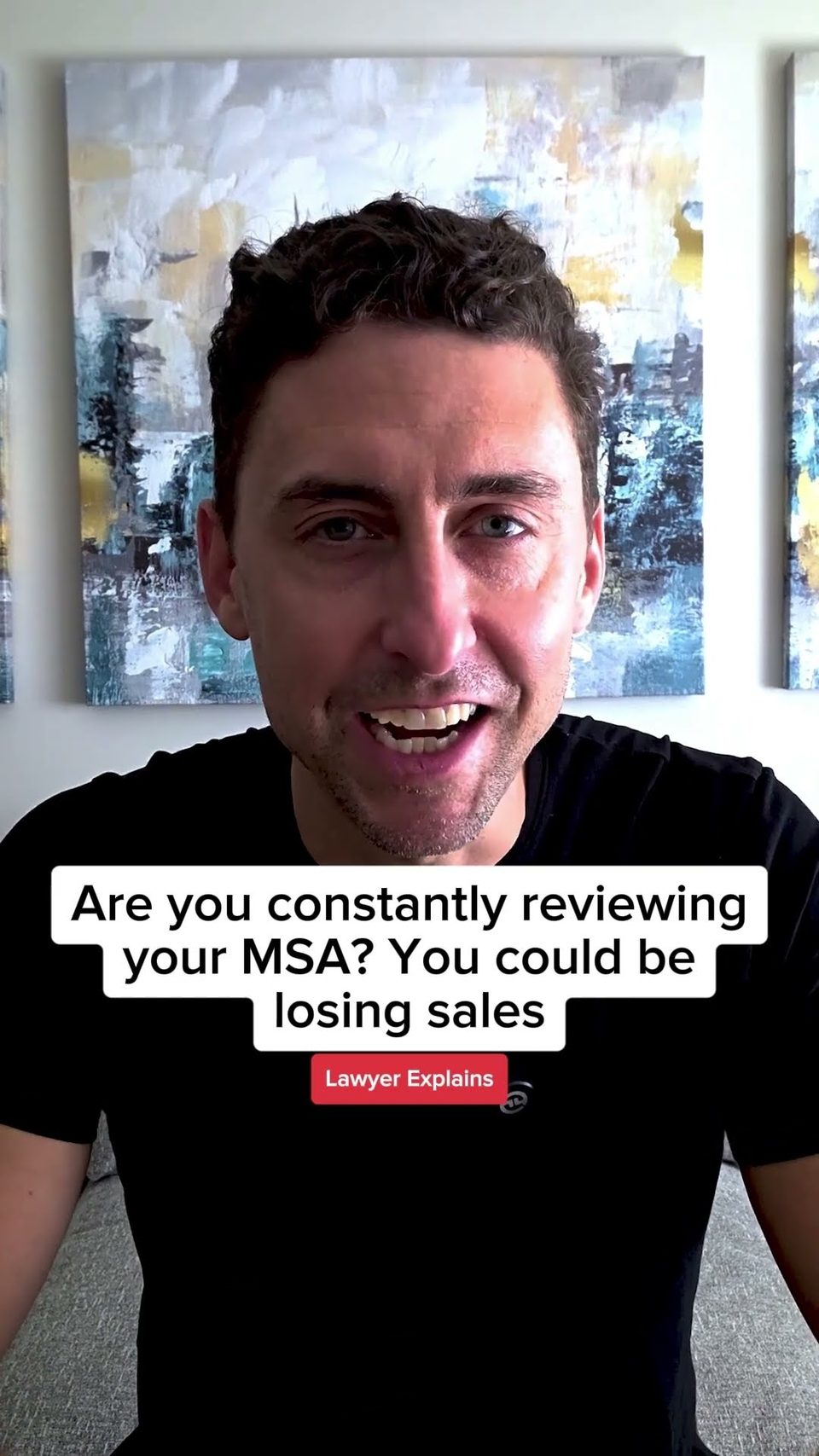 0:26Are you constantly reviewing your MSA You could be losing sales
Further reading
More on business contracts.
 Case studyUnlocking Growth Without CapitalRead the case study
 BlogTrade Secret vs. Patent: Which to ChooseRead the article
 BlogWhat Is a Trade Secret? Definition and ExamplesRead the article
Also worth reading
09 People also ask
Questions about non-disclosure agreements.
- 01
Are confidentiality agreements and NDAs the same thing?
They serve similar goals.
Confidentiality agreements and NDAs aim at the same thing, and many companies use the names interchangeably. The difference is form: confidentiality provisions can sit inside a larger contract, while an NDA stands alone as its own agreement. Either way, Next Era Legal's guide says California enforces it when it is narrowly written, names real confidential information and has reasonable time limits.
- 02
Who can be bound by an NDA?
Employees, contractors, agencies, suppliers and potential buyers.
An NDA can bind employees, contractors, agencies and suppliers, as well as potential buyers looking at a company for investment or acquisition. Binding California employees or contractors brings in California employment law, and an NDA cannot be used as a non-compete. That intersection is one of the cases where Next Era Legal recommends a lawyer's review.
- 03
Does an NDA protect an idea?
It protects information defined as confidential and kept that way.
An NDA protects information that the agreement defines as confidential and that is actually kept confidential, not an idea in the abstract. That makes the definition the core of the document, and Next Era Legal warns that language that is too broad weakens enforceability, so the definition of confidential information has to be specific.
- 04
How long should confidentiality last?
For a reasonable period.
Confidentiality under an NDA should last a reasonable length of time, matched to the information involved and the relationship between the parties. California favors reasonable time frames. When the other side asks for a very long duration, Eric Proos of Next Era Legal lists that request among the moments to involve a lawyer.
Eight locations, one teamTypically replies the same business day
 Los AngelesBeverly Hills Office(310) 734-4791Mon–Fri
 Orange CountyNewport Beach Office(949) 209-4184Mon–Fri
 San DiegoUniversity City Office(619) 323-3445Mon–Fri
 San FranciscoSoMa Office(650) 374-1337Mon–Fri
 HoustonUptown Office(713) 255-2098Mon–Fri
 Metro DetroitTown Center Office(313) 887-4788Mon–Fri
 Washington, DCK Street OfficePhone coming soonMon–Fri
 MiamiBrickell Office(305) 686-4866Mon–Fri